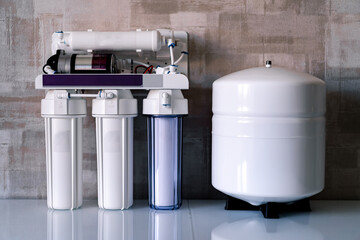
Water Treatment

Ferric Chloride Uses
It is used in sewage treatment as a coagulant and in the production of potable water.
It acts as an etchant for copper-based metals in printed circuit boards as well as a specialty pigment production and, in the pharmaceutical industry, a precursor in synthetic iron oxide.
It also acts as a precursor for anemia treatment medicine.
Water Treatment :
Iron Trichloride is largely used in the form of liquid as a solution for water and sewage treatment. About 93 % of Ferric Chloride is used for water treatment, namely waste, sewage, culinary and potable water. It is used in the water treatment industry as a flocculant, reactant and coagulant as it increases the speed of sedimentation, which usually takes place better in cold water, Iron (III) coagulants were found to be effective in wide ranges of pH and temperature at removing total organic carbon (TOC) and humic substances from water.
It is used as an iron-based coagulant and is very efficient in removing turbidity, while treating water containing high color and high humic acid, the required dose of iron (III) chloride to remove color is less than alum, ensuring less sludge formation.

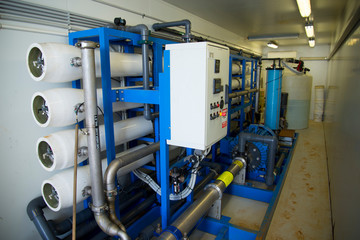
Potable water :
Iron (III) Chloride works as a flocculant in the process of production of drinking water. When it is added to water, Iron (III) hydroxide precipitates and adsorbs finely divided solids and colloids like humic acid and clay, making the water clear. It gets rid of suspended impurities and heavy metals in the Ph range of 7.0-11.0.
It is further helpful in the potable water industry by removing high and low turbidity, enhancing coagulation, NOM (natural organic matter), and removing DBP (disinfection by-products), TOC, and color. It also works as a sedimentation and filtration aid.
Industrial Wastewater Treatment :
Iron chloride is very efficient since it removes heavy metals, sulfides, and contaminants like oils and polymers, which are difficult to degrade. Phosphate levels also get reduced to below 1ppm. Sludge conditioning with Ferric Chloride improves the dewatering of filter sludge so that drier sludge better suited for disposal on incineration is obtained.
It acts as a water coagulant and helps in the removal of suspended solids, organic matter, and impurities by forming flocs that can be easily separated. The water is passed through a pre-existing deposition tank after flocculation. Water particles become more conductive to electricity when chloride makes them more corrosive. Chloride merges with metal cations in pipelines to form different salts that are soluble. Due to this, the number of metals in drinkable water increases.
Ferric Chloride gets rid of fine particles that are not removed from the water even after filtration. When 40% is added to the water, the particles group together and forms larger clumps that become heavy and sink to the bottom, thereby cleaning the water.
It is also used in wastewater treatment aiding in the removal of phosphorus and preventing the formation of hydrogen sulfide, which is an extremely toxic gas.
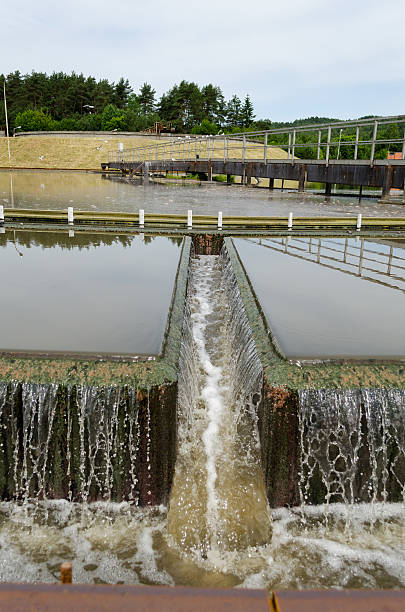
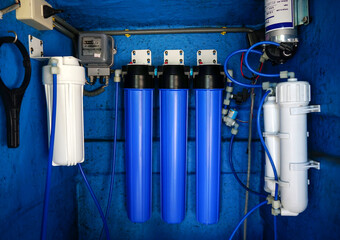
Polishing Treatment of yeast wastewater by Iron (iii) Chloride :
In this coagulated effluent, color, residual turbidity, and COD were calculated, and size distribution, molecular weight, and charge property were identified. Using Ferric Chloride in a pH range of 4-5. Under preferred conditions, COD and color removal efficiencies were seen up to 96% and 86%, respectively.
Industrial Effluent Treatment :
Iron chloride is also used as a coagulant in sewage treatment, improving the overall quality of water as it is highly effective and efficient in cleaning and also as a sludge dewatering agent. A slight residual color is left by this chemical, also offering very good turbidity removal. By adding 20 g per liter of Ferric Chloride, the coagulation process reduced the COD by 69% and the BOD by 60%.
It forms compounds that are insoluble with phosphates, helping in their precipitation and continuous removal from wastewater. Iron chloride and poly aluminum chloride work for COD, BOD, TSS, and Oil & Grease reduction, with their doses being 180 mg/300 ml coupled with 45 mg/300 ml Polyvinyl alcohol.
Furthermore, the removal efficiency of iron chloride in neutral to a slightly acidic medium having a pH = 6-7 for COD (97.5%) and BOD (97.5%) is higher than poly aluminum chloride Flocculants, aids in the grouping of small particles in water so they can be removed, iron Chloride on being dissolved in solution gives an aqueous brown tinted solution.
The solution is used to remove particles from water. Chemicals, such as chlorine, can also be added for the purpose of disinfecting. Iron (iii) chloride is also used as a chemical in wastewater treatment as it is eco-friendly.
RO Systems
Ferric Chloride is used as a coagulant or flocculant in the pre-treatment stage which is accomplished before the water reaches the reverse osmosis system. The aim of pre-treatment is to get rid of organic matter, suspended solids and other contaminants that can damage the RO membrane. It is a potent flocculant and coagulant that can settle and group the suspended particles in the water, making it easier for them to come out by filtration and sedimentation. It helps in the removal of organic matter, algae, and some metal ions.